News

Designing an Automated Chicken Farm with H-Type Layer Battery Cage System

2025-10-14 17:53:56

In modern poultry farming, efficiency, productivity, and hygiene are crucial factors for large-scale operations. With the growing demand for eggs worldwide, farmers are increasingly adopting automated solutions, particularly H-type layer battery cage systems, which offer a comprehensive approach to raising layers efficiently while minimizing labor costs.

Understanding the H-Type Layer Battery Cage System

The H-type layer battery cage system is designed to optimize space utilization, ensure proper ventilation, and facilitate management of large flocks. Unlike traditional A-type cages, H-type cages allow for multi-tiered layouts, making it possible to house tens of thousands of chickens in a single farm while maintaining a controlled environment.

Each battery cage system is equipped with:

  • Automatic drinking system: Provides clean water, reduces spillage, and minimizes disease risks.
  • Automatic feeding system: Gantry or chain feeding machines deliver feed efficiently to every cage row.
  • Automatic egg collection system: Egg belts collect eggs directly from cages, preventing breakage.
  • Automatic manure cleaning system: Belt or scraper systems maintain hygiene and prevent ammonia buildup.

Planning the Farm Layout

Efficient farm layout is essential to maximize productivity. When using H-type cages for large-scale farms, consider the following factors:

Cage Quantity and Row Arrangement

Calculate the number of h type chicken cages based on the total flock size. For example, a 30,000-layer farm with cages housing 144 birds each can achieve optimal density using multi-tier H-type cages arranged in thress rows.

Ventilation and Lighting

Proper air circulation prevents heat stress and respiratory diseases. Combining automated systems with natural or artificial lighting ensures hens remain productive year-round.
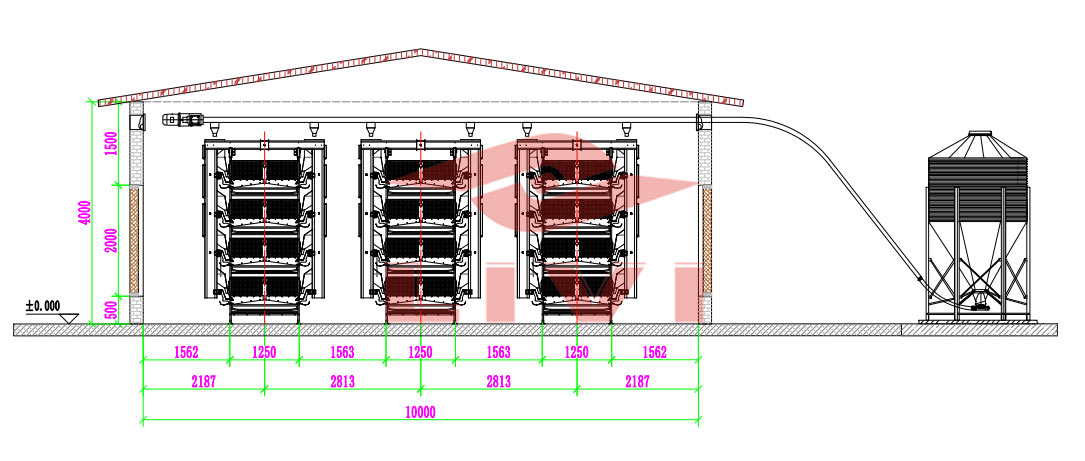
Equipment Placement

  • Gantry feeding machines: One per chicken house is sufficient for all rows.
  • Belt manure cleaning machines: Each row requires one.
  • Egg collection belts: Installed per row.
  • Scraper systems: One scraper can manage three rows; larger layouts require multiple scrapers.

Advantages of Automation in Layer Farming

  • Labor Efficiency: Automation reduces manual feeding, watering, egg collection, and manure management.
  • Improved Hygiene and Health: Automated manure removal and clean water supply reduce disease risks.
  • Consistent Egg Production: Uniform feeding ensures high-quality and consistent eggs.
  • Scalability: Easy to expand with additional tiers or rows without redesigning the farm.

Case Example 1: 20,000-Layer Farm in Aruba

At a 20,000-layer farm in Aruba, H-type cages were installed across multiple chicken houses:

  • 4-tier H-type chicken cage with 47 sets per row
  • Automatic feeding system in each house
  • Automatic drinking systems
  • Automatic manure cleaning systems per row
  • Automatic egg collection per row

Results:

  • Labor savings of 60%
  • Reduced disease incidence by 30%
  • Stable and high-quality egg production


Case Example 2: 60,000-Layer Farm in Colombia

In Colombia, a large-scale poultry farm with 60,000 layers implemented the H-type layer battery cage system to maximize productivity and maintain high hygiene standards. The farm setup included:

  • 4-tier H-type cage rows with 150 cages per row
  • Gantry feeding system in each house
  • Nipple drinking systems with water tanks
  • Belt manure cleaning systems per row
  • Egg collection belts per row for efficient harvesting

Results achieved after implementation:

  • Labor reduction by 65% due to automation
  • Significant improvement in hygiene and disease prevention
  • Stable, high-quality egg production meeting both local and export demand
  • Optimized space utilization with multi-tier cage layout

Conclusion

For modern poultry farmers seeking efficiency, scalability, and hygiene, adopting an H-type layer battery cage system with automation is a smart investment. Proper layout, ventilation, and equipment placement ensure high productivity while minimizing labor costs and disease risks.

Whether planning a 10,000-layer or 50,000-layer farm, this system provides a flexible and efficient solution to meet growing market demands.


Start Your Chicken Farm Now

    • *
    • *
    • *

    Home Tel Mail Inquiry

    ';